Why a Bad Pruning Cut Can Cost a Tree Its Life
Quick Answer: Pruning for tree health means removing dead, diseased, and poorly attached branches so a tree can close its own wounds and put its energy into strong growth instead of fighting decay. The cuts that matter most are made just outside the branch collar, the swollen ridge of tissue where a branch meets the trunk, because a clean cut there lets a tree seal the wound with a tight ring of new tissue within one growing season. Removing more than about one quarter of a tree's living crown in a single visit stresses the tree and can trigger a flush of weakly attached sprouts instead of healthy new growth. Crown thinning opens a canopy to light and airflow, which reduces the damp, still conditions that fungal pathogens need to spread. Cuts made in the wrong spot, known as flush cuts or stub cuts, delay wound closure and give insects and decay a way into the trunk. Through the wet winters and windstorm season common west of the Cascades, a tree with a well managed structure sheds wind load evenly instead of failing at its weakest point.
Look up into a twenty year old bigleaf maple in a Willamette Valley backyard and it can seem perfectly fine. Full canopy, green leaves in season, bark that looks intact from where you're standing. Climb into that same crown and the picture changes. You might find a fork with included bark pulling apart at the seam, three or four dead limbs hiding under live growth, and a stub from a cut made years ago that never closed over. None of that shows from the driveway.
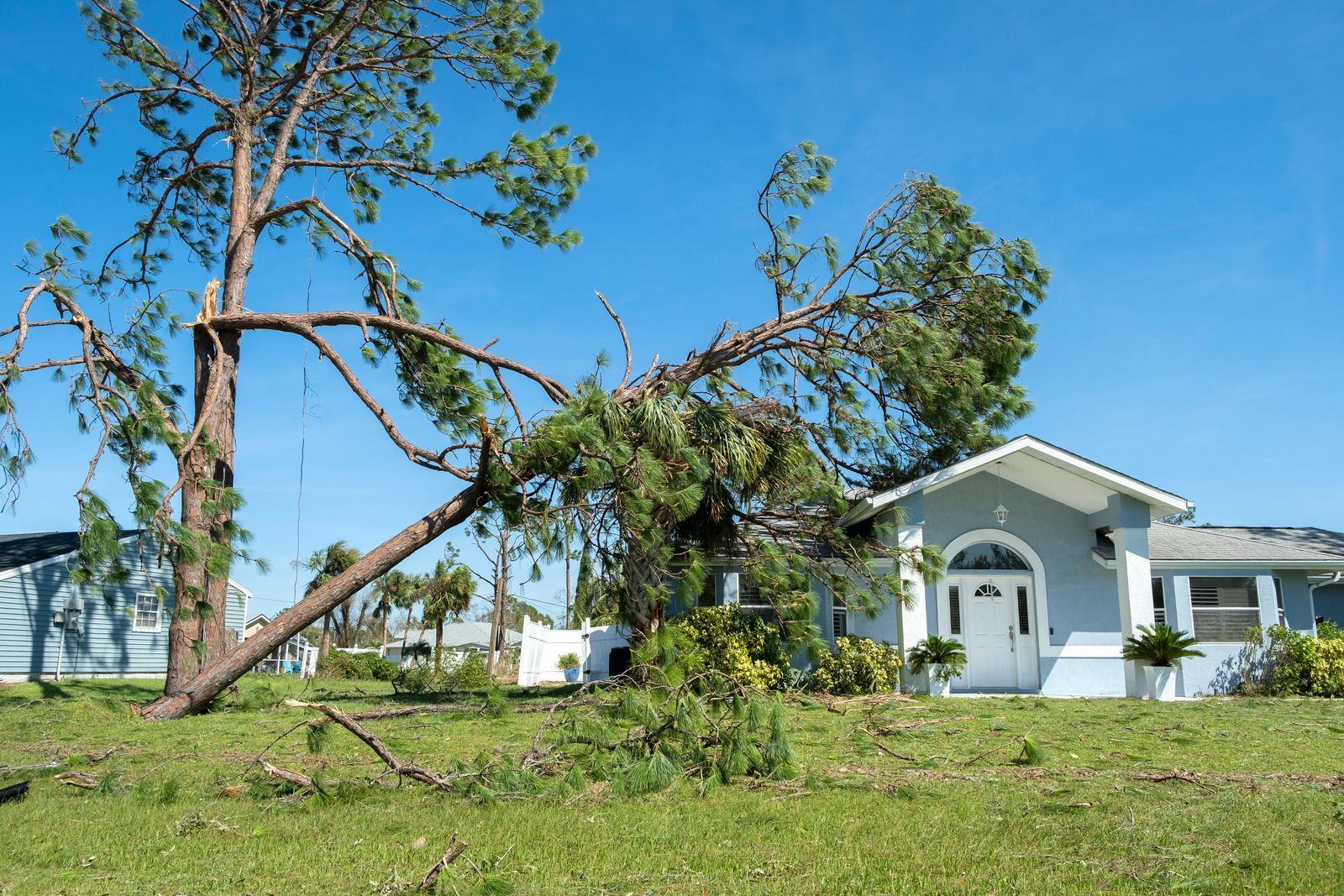
It shows up during the first hard windstorm off the Coast Range, when the weak union finally lets go and forty feet of limb comes down across the yard. That is the gap between what a tree looks like and what its structure can actually handle.
Pruning gets treated like a grooming task, something to keep a tree tidy near the roofline or clear of the driveway. But the pruning that actually matters most is aimed at a tree's internal condition: how it closes wounds, how weight sits across its scaffold limbs, and whether decay and disease already have a way in. That's a different job than shaping a hedge, and it's the one we spend most of our time thinking about on any given property.
What Pruning for Health Actually Means
Arborists rank pruning goals in order: safety first, health second, appearance last. A cut removing a genuine hazard, like a cracked limb over a walkway, comes before one made purely for shape. Health pruning sits in the middle, addressing conditions that become safety problems if ignored.
Crown cleaning is the most basic form of health pruning, and every tree benefits from it on a regular cycle. It removes dead, dying, diseased, and broken wood along with crossing or rubbing branches, without changing the tree's shape, just removing existing liability.
Trees shed branches on their own once shading or competition cuts off a limb's energy supply. Branches lost that way, or torn off by wind and snow, leave large, ragged wounds that rarely seal well. A planned cut closes over far more reliably than breakage ever does.
Yellowing foliage out of season, sunken or discolored bark, fungal growth at the trunk's base. Each signals that a tree's internal condition doesn't match its appearance from thirty feet away. Whatever caused it has usually been building for a while, worth a closer look before more foliage is lost.
The Cuts That Heal and the Cuts That Don't
Location is the single detail separating a cut that helps a tree from one that hurts it. Every branch has a collar, a swollen ring of tissue where it joins the trunk, and a bark ridge along that junction. Both are distinct tissue and need to stay untouched.
A correct cut goes just outside the collar and bark ridge, angled so only branch tissue comes off. Cut there and the wound closes from a healthy ring of new tissue growing evenly around it that season. Cut in the wrong spot and the tree pays for it for years.
Larger limbs need a staged approach, since one cut straight through tends to tear bark down the trunk as the branch falls under its own weight. The first cut goes underneath, a few inches out. The second removes most of the weight from above, further out still.
The third and final cut, placed just outside the collar, removes the remaining stub cleanly with nothing left to tear. A flush cut injures the trunk itself and forces uneven closure. A stub cut leaves dead material behind, and both invite decay fungi and boring insects in longer than a correct cut would.
TIP: Check a pruning cut from a previous season before assuming the work was done well. A tight, even ring of new bark forming all the way around the cut is the sign of a proper cut placed just outside the branch collar. A ring that only formed on the sides, a visibly sunken area, or a stub still poking out past the callus tissue points to a flush or stub cut that's likely to become a decay pocket over time.
Crown Thinning and the One Quarter Rule
Crown thinning selectively removes live branches to let more light and air move through a canopy, overlapping health pruning with long term structure work. A denser canopy holds moisture longer after rain, favoring the fungal pathogens behind leaf spot and canker diseases. Opening the crown modestly changes that damp microclimate enough to matter.
Removing more than about a quarter of a tree's living crown in one season puts real stress on it, often provoking epicormic sprouts that attach weakly and add clutter rather than strength. A crown needing more than a quarter thinned should have that work spread across two or three seasons instead.
Thinning cuts should come from throughout the crown, favoring smaller lateral branches over large ones. Stripping inner foliage and leaving growth only at the tip, called lion's tailing, creates a long lever arm prone to snapping in wind and sunscald on newly exposed bark, working against the point of health pruning.
Branches attached at a wide, U shaped angle hold on far better than a narrow, V shaped angle, which traps a wedge of bark instead of forming a solid union. When codominant stems compete for the same position, removing growth from one lets the other establish as dominant leader, producing a stronger tree.
Warning: Cutting large upright branches back to a stub between nodes, sometimes called topping or rounding over, is one of the most damaging things that can happen to a tree. It forces a flush of weakly attached sprouts at the cut site, exposes large areas of wood to decay, and permanently compromises the tree's ability to close its own wounds. A tree that's been topped rarely recovers its original structure, and the sprouts it produces are far more likely to fail in a future storm than the branches that were removed. Be wary of anyone who recommends this as a routine fix for a tree that's grown too large.
Reading a Tree's Structure Before Any Cut Is Made
Every pruning visit starts with an assessment, not a chainsaw. Weak unions, dead limbs, and root problems each send a different signal, and mixing them up leads to cutting the wrong thing or missing the issue that actually matters most.
A dead branch still attached to the canopy, or a broken limb caught partway down and sometimes called a hanger, sits near the top of any inspection list. These pieces have already failed structurally and tend to come down without warning, often during wind or heavy rain.
A fork where bark has folded inward instead of forming a clean union is a slow motion structural failure. These unions can hold for years before splitting under a wet snow or strong gust, which is why catching them early with selective pruning beats fixing a split later.
A canopy grown heavy and lopsided on one side puts uneven load on the root system anchoring the tree, a bigger concern in the wet, saturated soils of a Willamette Valley winter when root grip is already reduced. Rebalancing crown weight protects the roots as much as the branches.
Timing Pruning to Wet Winters and Wind
Species and season both shape when pruning does the most good. Conifers like Douglas fir and western red cedar hold a strong central leader that rarely needs heavy thinning, though dormant season cutting limits sap and resin loss. Hardwoods like bigleaf maple grow lateral branches that compete for dominance instead.
That competing growth is the exact structural issue crown thinning and codominant stem correction address. Most hardwoods respond best to pruning in late winter before new growth starts, when branch structure is easy to see and wounds close quickly once spring resumes. Dead wood is the exception.
Dead and broken wood can come off anytime rather than waiting for a season, since there's no living tissue left to protect. Wet winters raise the stakes on cut quality, since a fresh wound exposed to weeks of rain sits in close to ideal conditions for decay fungi to move in.
A clean cut at the branch collar matters more here than somewhere drier, especially with windstorm season following through fall and winter. A well thinned, evenly balanced crown is simply better equipped to shed that load without a limb giving way at its weakest point.
FAQs
How often does a mature tree actually need to be pruned for health?
Most established trees do well with light health pruning every one to three years, depending on species, age, and proximity to a structure. Catching dead or weakly attached wood early means smaller cuts than waiting.
Can pruning at the wrong time of year actually hurt a tree?
Yes, in certain cases. Some species carry disease risks tied to the season a wound is made, since fresh cuts attract insects that spread pathogens. Dormant season pruning avoids most of that risk for hardwoods.
What is the real difference between crown thinning and crown reduction?
Crown thinning removes select branches throughout the canopy to improve light and airflow while keeping overall shape intact. Crown reduction shrinks the crown back to a lateral branch, reserved for trees that outgrew their space.
Is it safe to prune large branches on my own property myself?
Small, low branches reachable with hand tools are reasonably safe to manage. Anything needing a ladder, work near power lines, or branches over four inches across carries real risk and a higher chance of a bad cut.
How can I tell if a tree was pruned incorrectly in the past?
Look for flat, saucer shaped scars where a collar should have formed a ring, or short stubs beyond an old cut. Discolored or sunken bark spreading from a cut also signals a wound that never closed properly.
Do evergreen conifers need the same pruning approach as deciduous trees?
Not exactly. Conifers keep a strong central leader and rarely need heavy thinning like hardwoods do. Their pruning focuses more on deadwood removal and correcting a damaged leader than on branch spacing and union strength.
Building Structure Long Before a Storm Tests It
A tree that receives consistent, correctly placed cuts over its life develops a structure that absorbs wind, carries a wet snow load, and closes its own wounds quickly when something does go wrong. That resilience builds gradually, one pruning cycle at a time, well before any storm ever puts it to the test. The trees that fail dramatically are rarely the ones pruned too much. They are almost always the ones nobody looked at closely enough to catch a weak union or a bad cut from years before.
Purple Heart Tree Service
has spent several
years reading crown structure and correcting past
pruning
mistakes on properties throughout Eugene, Oregon, where wet winters and windstorm season test every union a tree has formed. That close attention is what catches a weak fork or a patch of deadwood while the fix is still simple. A tree cared for this way holds its shape and keeps standing long after the ones left unexamined.